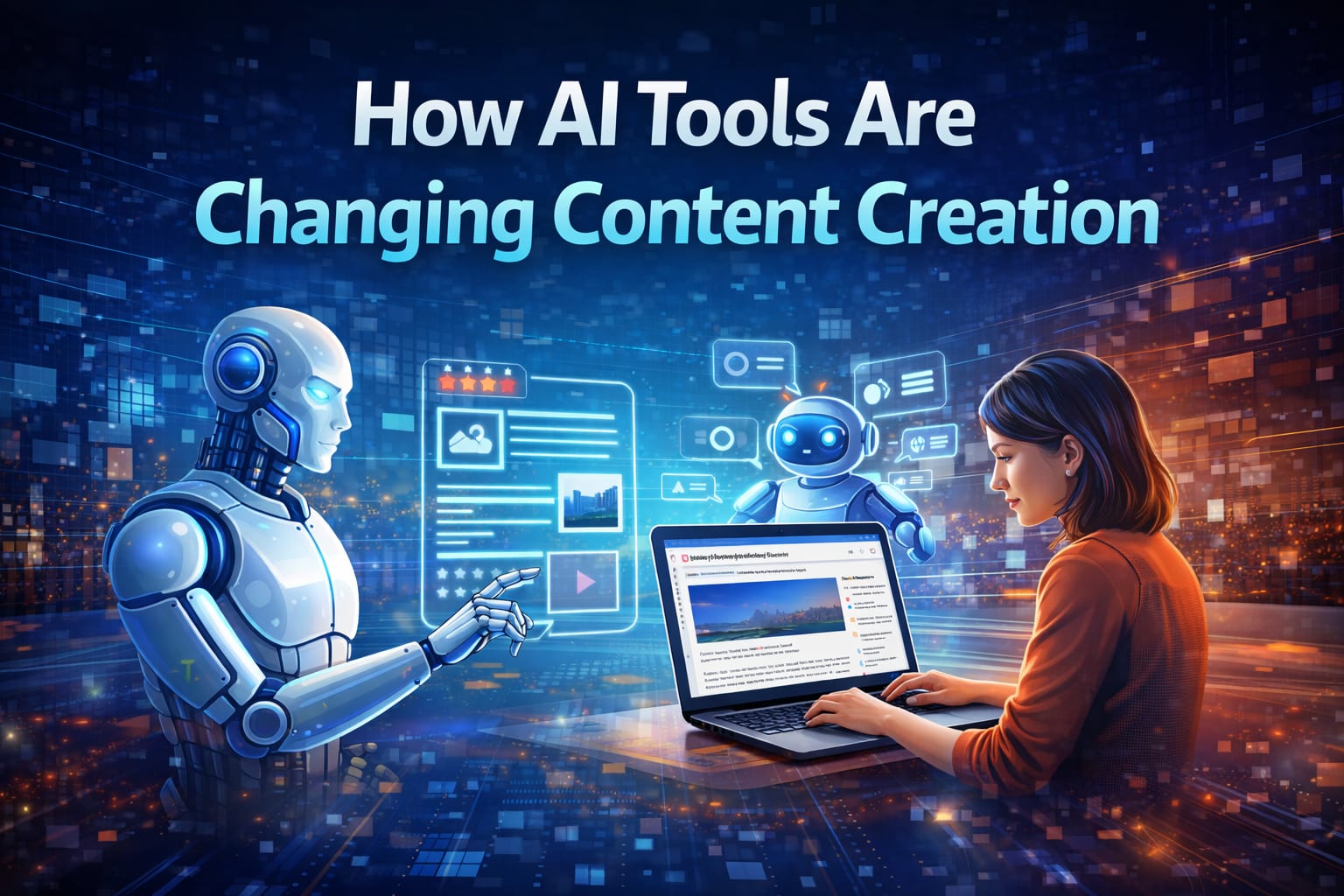
Explore the revolutionary impact of AI on content creation workflows, from writing to video production.
AI-powered tools are rapidly becoming part of modern content workflows. From drafting outlines to improving grammar and generating ideas, these tools are often misunderstood as replacements for human writers. In reality, AI is changing how content is created, not eliminating the role of writers.
Understanding this distinction is essential for anyone working in content, marketing, or publishing.
What AI Tools Do Well in Content Creation
AI tools excel at repetitive and time-consuming tasks. They can generate rough drafts, summarize information, suggest headlines, improve clarity, and assist with formatting. These capabilities significantly reduce the time required to move from idea to publishable content.
AI is particularly effective when used for brainstorming, research assistance, and structural support.
Where Human Writers Remain Essential
Despite their capabilities, AI tools lack original insight, lived experience, ethical judgment, and true audience understanding. They cannot fully grasp brand voice, emotional nuance, or contextual sensitivity.
Human writers are responsible for defining intent, refining arguments, adding depth, ensuring accuracy, and maintaining credibility. AI-generated content without human oversight often feels generic or disconnected.
AI as a Writing Assistant, Not a Replacement
The most effective workflows treat AI as an assistant rather than an author. Writers who use AI to accelerate drafting and editing can focus more on strategy, storytelling, and audience engagement.
This collaboration increases productivity without compromising quality or authenticity.
The Future of Content Creation
As AI tools continue to improve, the demand for skilled writers who can guide, edit, and validate AI-assisted content will increase. The role of the writer is shifting from pure creation to orchestration and quality control.
Those who adapt to this change gain a significant advantage in efficiency and output.
Final Perspective
AI tools are transforming content creation, but they do not replace writers. They enhance workflows, reduce friction, and support creativity when used responsibly. Writers who learn to work alongside AI will remain essential in a content-driven digital economy.
Admin User
Verified CreatorAn expert contributor at CoolPosts, sharing insights on Artificial Intelligence and digital innovation.